10 B2B Lead Generation Services Compared for 2026
Compare 10 B2B lead generation services by model, cost and fit. Covers managed outbound, SDR outsourcing and signal providers, plus a vendor checklist.
The most popular advice about B2B lead generation services is to compare database size, outreach volume, and promised meetings. That's the wrong starting point. A list tells you who exists. It doesn't tell you who needs you this week, and a calendar invitation doesn't prove there's an opportunity.
Timing matters because buyers don't start evaluating suppliers when your representative calls. In a study of recent B2B buyers, 6sense's buyer experience findings showed that 73% of buying groups had at least two vendor preferences when the group formed. Waiting for an inbound inquiry can mean arriving after buyers have already developed preferences.
Buy the work you're missing, not the largest package. The options below fall into overlapping service models:
- Signal providers identify accounts with a timely reason to engage. Your team still needs to make contact unless execution is included.
- Managed outbound providers handle research, messaging, outreach, replies, and meeting booking. You buy campaign execution.
- SDR as a service providers supply sales development representatives and management. You buy prospecting capacity, with varying levels of dedication.
These aren't interchangeable. A founder who enjoys calling needs different support from a sales leader who has nobody available to prospect. The useful comparison is what each vendor delivers, what remains your responsibility, and which commercial details you can verify before signing.
1. Trefle.ai
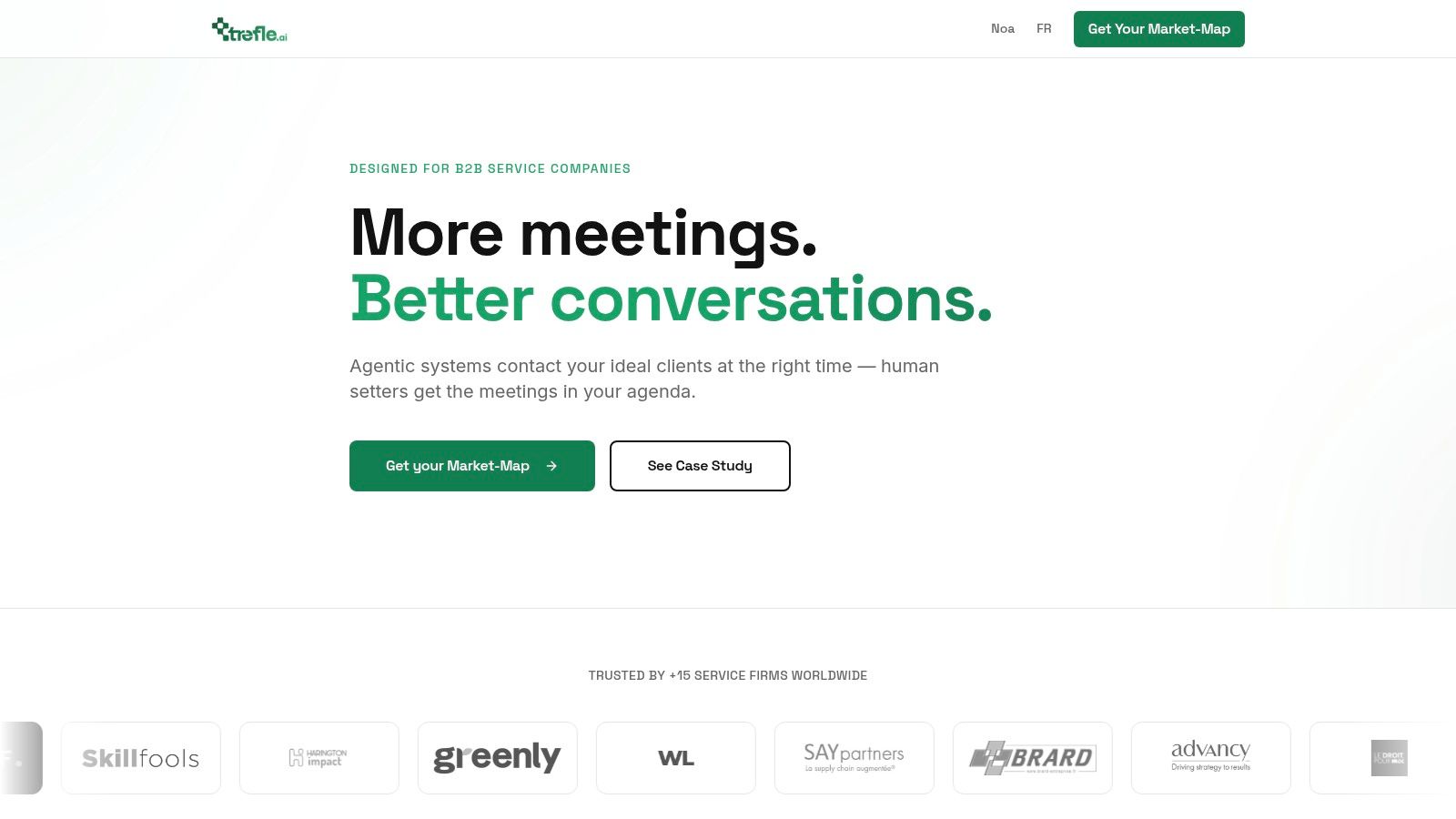
Model: signal provider with managed outbound available. Our service is designed for niche B2B service companies that need a reason to contact an account, not another spreadsheet filtered by industry.
Noa delivers a weekly feed of opportunities prepared for calling. Each includes the company, a named decision maker, verified contact details, a dated buying signal, a proof link, and a suggested opener. Signals can include relevant hiring, funding, leadership changes, permits, certifications, regulatory deadlines, and market events.
Say an engineering consultancy targets companies planning facility expansion. A relevant permit can justify investigation and a specific opening question. It doesn't prove budget or willingness to buy, so the caller must still qualify the need.
What you get and what you still need
- Research support: We review and score accounts, identify relevant buyers, and verify contact information before outreach.
- Execution options: Use the opportunity feed internally, commission a custom market map, or have human setters run managed outbound and book qualified meetings.
- Commercial limits: Pricing is custom rather than a published standard tariff. The ongoing offer states meetings in 4 weeks, but that isn't a promise of closed revenue.
Our EcoVadis consulting case study reports 3x more qualified conversations. It's relevant evidence for a specialist consultancy, not a forecast for every sector or offer.
The trade off: a signal feed helps only if someone acts on it. Managed outbound removes that execution burden, but buyers still need a clear offer and capacity to handle meetings. Our comparison of lead generation agencies for consulting firms provides additional context for that choice.
2. Belkins
Model: managed outbound. Belkins is worth comparing when you want prospect research, contact validation, outreach, reply handling, and appointment booking under the same provider.
Its campaign approach combines email and LinkedIn with calling where appropriate. It also offers no show recovery, which matters if your internal team doesn't have time to chase missed appointments.
The appointment based option makes qualification rules especially important. Paying for appointments doesn't remove commercial risk. It moves the argument toward what qualifies as a billable appointment.
Contract rule: Agree on an acceptable meeting before discussing how many the vendor will deliver.
Define the company profile, contact's responsibilities, relevant business problem, and whether the prospect knowingly agreed to discuss your offer. Establish the challenge process for meetings that miss those conditions.
Pricing transparency is better than a completely unpublished offer: Belkins publishes starting prices for appointment based and broader services. Those starting points still don't establish your total campaign cost or included scope.
- Works well for: Buyers who want managed appointment setting with an explicit acceptance process.
- Main limitation: The standard service isn't exclusively focused on phone outreach. Confirm the proposed channel mix rather than assuming callers will lead the campaign.
- Get in writing: Setup costs, appointment acceptance rules, disputed meeting handling, and whether missed meetings are replaced or rescheduled.
3. Callbox
A logistics campaign and a managed services campaign can both produce appointments while requiring very different targeting and qualification. Callbox publishes examples across those markets, making it useful for buyers who want to examine campaign design before speaking with sales.
Model: managed outbound. Its services include account profiling, prospecting, appointment setting, and follow up. This is a campaign service rather than a contact database subscription.
Use the case studies to question the proposal
Ask which parts of a relevant example would transfer to your business. Geography, buyer seniority, offer complexity, and the definition of a lead matter more than the headline outcome.
Company reported results are useful reference points. They aren't expected results for your campaign, especially when your brand awareness or addressable market differs.
- Strength: A broad collection of campaign examples gives you something concrete to interrogate.
- Limit: Standard pricing wasn't available in the reviewed information. You'll need a scoped proposal to compare costs.
- Operational question: Confirm exactly which channels, research tasks, and follow up activities your engagement includes.
A broad service can save coordination work. It can also hide differences in how much effort each channel receives. Compare the proposed deliverables against this guide to outsourced B2B lead generation pricing, then separate setup, ongoing execution, and optional work in the quote.
4. SalesRoads
Dedicated representatives are the main reason to shortlist SalesRoads. Its outsourced sales development offering combines calling, personalized email, prospect research, a custom sales playbook, CRM integration, and reporting.
Model: SDR as a service. The distinction from a campaign agency is staffing. You're evaluating the representatives assigned to your account, their coaching, and the management process around them.
Calling still needs careful measurement. The Belkins cold calling benchmark review, citing Gong's analysis of more than 300 million calls, reports an average 5.4% connect rate. That's a channel benchmark, not a SalesRoads performance claim.
Dedicated capacity needs enough work
A dedicated SDR can learn your terminology and objections. That investment makes less sense if your target market is tiny, your offer keeps changing, or nobody can promptly review campaign feedback.
SalesRoads publishes program pricing by team size, which helps with initial budgeting. Check how its billing period, onboarding, ramp time, and cancellation provisions interact before comparing it with monthly quotes.
- Best fit: A team with a defined offer, sufficient account coverage, and a preference for calling.
- Main trade off: Dedicated capacity may exceed what a founder needs for an early outbound test.
- Proof to request: Sample call reviews, the reporting dashboard, and the process for turning rejected meetings into targeting changes.
Don't confuse rep dedication with guaranteed opportunity creation. You still need the right market and a credible reason to talk.
5. SalesHive
Model: managed outbound with SDR delivery. SalesHive combines list building, cold calling, email, qualification, and meeting booking, supported by a strategist.
This is a practical option when you don't want separate suppliers for data, email execution, and calling. The company describes CRM synchronization and access to campaign activity, which should help your team inspect execution rather than wait for a summary report.
Its offer includes custom targeting, with intent signals available as an additional input. Ask what those signals identify. Category interest, engagement with your website, and a dated company event imply different things about readiness.
An intent label isn't a substitute for explaining why the account belongs in the campaign.
Pricing requires a quote, with scope affected by team location, channels, and outreach volume. SalesHive describes monthly and annual options and lists no setup fee for its managed program, but cancellation terms still need review.
- Strength: Calling and email can be managed together rather than coordinated across vendors.
- Limit: A package description doesn't establish your rep allocation, actual calling capacity, or accepted meeting definition.
- Buying test: Request a sample campaign report showing activities, conversations, meetings held, and sales acceptance separately.
For a lean team, the important question is who owns the handoff after a prospect responds. Use this guide to outsourced B2B appointment setting to distinguish calendar management from genuine qualification.
6. CIENCE
Already own prospecting software but lack people to run it? CIENCE belongs on that shortlist. Its managed service covers target accounts, data, outreach, response handling, qualification, and meeting handoff.
Model: managed outbound. Its examples span technology, financial services, manufacturing, and professional services. Those examples can help establish market familiarity, but the proposed team still needs to explain your buyer's problem in plain language.
The service combines people and tools. Evaluate those components separately rather than treating automation as evidence of better commercial results.
Inspect the human checkpoints
In a survey of B2B sales professionals, Belkins' AI adoption study found that 45% hadn't measured AI's effect. That finding doesn't assess CIENCE, but it's a good reason to demand outcome reporting from any technology supported service.
Ask who approves targeting, reviews messages, handles ambiguous replies, and decides whether a prospect qualifies. Those decisions affect your reputation more than the automation platform does.
Pricing is custom scoped, and the company describes monthly engagements. A proposal should clarify which data, tools, staff, and management tasks are included.
- Works well for: Teams that need execution capacity rather than another software subscription.
- Main limitation: The service scope may be larger than a small founder led test requires.
- Contract detail: Specify how missed, rejected, or out of profile meetings affect reporting and billing.
7. Martal Group
Martal Group is most relevant when the requirement may extend beyond booking appointments. Its broader offering includes outbound sales development, inbound lead generation, sales, and customer onboarding.
Model: SDR as a service and managed outbound. That breadth can reduce handoffs if you need wider sales support. It can also make proposals harder to compare with a narrowly scoped appointment setting service.
Start with the work you need now. Don't buy later sales support merely because it sits beside prospecting on the service page.
- Useful scope: Prospecting and sales development for B2B sectors, including technology and professional services.
- Pricing visibility: The company describes a flat monthly fee for outbound lead generation, but doesn't provide a universal public price.
- Commitment risk: Some engagements involve a paid pilot. Establish its deliverables, decision point, and exit provisions before paying.
Separate people from software
Martal also describes technology offerings. Make sure the proposal distinguishes managed work from access to software, and names who handles research, replies, qualification, and meeting booking.
For selling across markets, request the actual delivery plan. Language coverage, local working hours, contact verification, and caller preparation deserve explicit answers.
The trade off is scope versus control. A broader partner can take on more work, but you need clearly assigned responsibilities to avoid paying for tasks your internal team already performs.
8. memoryBlue
Model: SDR as a service. memoryBlue offers outsourced prospecting, outreach, and appointment setting, with a focus on technology companies and complex B2B sales.
The pitch is capacity. You get outbound coverage without recruiting, training, and managing an internal SDR team. Its case studies describe target markets and channels, which gives you concrete material for testing whether its experience matches your buyers.
Complex sales expose weak callers fast. An external rep must separate a real problem from casual curiosity, and a request for information from a request worth a meeting. Get that wrong and your calendar fills with calls your closers resent taking.
Staffing check: Evaluate who will represent your business, not just who presents the proposal.
Ask how representatives learn your offer, which objections they must handle alone, and when they escalate technical questions to your team. Request an example of the briefing material passed to the salesperson before a meeting. A thin brief means your closers do the qualifying the SDR was paid to do.
Pricing is set by quote, so rep dedication, activity expectations, management coverage, and minimum commitment belong in the written proposal.
- Best fit: Technology businesses that need additional sales development capacity.
- Main limitation: A managed SDR program can be excessive when the founder is still discovering which problem buyers will pay to solve.
- Important boundary: External SDRs can qualify interest, but they shouldn't invent technical answers to keep a conversation moving.
Judge the training and feedback loop as carefully as the staffing plan. Access to representatives is cheap. Management that turns call recordings into better qualification is what you pay for.
9. Abstrakt
Not every suitable account is ready to meet. Abstrakt explicitly describes nurturing prospects that fit the target profile but need more time, alongside phone outreach, email, LinkedIn, qualification, and appointment booking.
Model: managed outbound and outsourced sales development. Phone is central to its described approach, with other channels supporting the campaign.
That channel emphasis deserves attention, not blind acceptance. A B2B Marketer multichannel benchmark reported that 85% of tracked meetings were booked by phone in the analyzed campaigns. That isn't an Abstrakt result or a prediction for your audience.
Make nurturing observable
A nurture process should record why the account isn't ready, what would change that, and when outreach should resume. Repeatedly sending generic reminders isn't meaningful follow up.
Abstrakt publishes starting pricing for outbound BDR programs. The final commercial comparison still depends on scope, market coverage, and the definitions behind its appointment guarantees.
- Strength: Live qualification and continued follow up can suit services with variable purchasing timing.
- Limit: Its specializations, including territory based campaigns and commercial trades, won't match every software or consulting offer.
- Contract question: What remedy applies when a guaranteed appointment misses the agreed company, contact, or timing criteria?
I'd prioritize the quality of the nurture records over the size of a promised appointment total. Those records reveal whether the provider understands why a prospect might eventually buy.
10. Leadium
Inbound response and outbound prospecting are different jobs. Leadium offers both, making it useful for buyers who need to compare those requirements rather than bundle them without discussion.
Model: managed outbound with SDR support services. Its outbound channel options include email, phone, LinkedIn, SMS, and gifting. It also offers inbound qualification and SDR sourcing, training, and management.
Channel breadth is useful only when the provider explains the purpose of each channel. A phone conversation can establish context. Email can carry supporting material. Gifting needs a commercial justification beyond being available in the package.
Scope inbound separately
An inbound prospect has already taken an action. The representative should know what happened and respond accordingly, rather than put that person through the same opening sequence as an unfamiliar outbound account.
Keep separate qualification rules, reporting, and ownership for the services. Otherwise, existing inbound demand can make the outbound program look more productive than it is.
- Strength: Buyers can compare outbound appointment setting with a distinct inbound response service.
- Pricing limit: Pricing wasn't available in the reviewed material, so a scoped quote is necessary.
- Staffing detail: Confirm how much delivery involves calling and whether representatives are dedicated.
- Acceptance detail: Define how no shows, duplicates, existing opportunities, and unsuitable meetings are handled.
Leadium is worth evaluating when your problem includes both generating conversations and handling incoming interest. Don't assume those activities need the same staffing allocation or success measures.
How the 10 services compare on model, published pricing, phone emphasis and fit
The ten services cluster into three models: signal providers that surface companies showing demand, managed outbound programs that run the campaign, and outsourced SDR teams sold like headcount. Compare rows within a model, not across.
| Item | Service model | Published pricing | Phone emphasis | Best for |
|---|---|---|---|---|
| Trefle.ai | Weekly buying-signal feed, market maps, and managed outbound | Custom; free signal-based company lists available | Human callers; verified direct phone numbers | Niche B2B teams seeking timely, signal-based prospects and qualified meetings |
| Belkins | Managed multichannel lead generation and appointment setting | Starting prices published; scope varies | Cold calling available; not phone-first | Teams wanting appointment-based pricing and defined meeting criteria |
| Callbox | Outsourced lead generation and appointment setting | Custom quote | Confirm channels and calling scope | Teams wanting a broad campaign backed by published case studies |
| SalesRoads | Dedicated outsourced SDR programs | Pricing published by team size | Phone-oriented, with outbound calling | Teams prioritizing dedicated reps, calling, and listed pricing |
| SalesHive | Managed lead-generation programs | Custom quote; no setup fee stated | Cold calling is a core channel | Teams wanting calling and email managed together |
| CIENCE | Managed prospecting, outreach, qualification, and meeting handoff | Custom quote; month-to-month engagements | Included in managed outreach; confirm channel mix | Teams needing a managed prospecting team, including those with existing tools |
| Martal Group | Outsourced multichannel lead generation and sales development | Flat monthly fee described; no universal price listed | Multichannel; confirm phone scope | Companies seeking broader sales support or cross-market prospecting |
| memoryBlue | Outsourced SDR prospecting and appointment setting | Not available in reviewed source | Phone, email, and social outreach in examples | B2B technology companies testing or extending outbound |
| Abstrakt | Outsourced, phone-led sales development and lead nurturing | Starting prices published; scope varies | Phone is central | Teams valuing live qualification and follow-up for not-yet-ready prospects |
| Leadium | Outbound and inbound appointment setting, plus SDR services | Not available in reviewed material | Phone is one of several channels; confirm emphasis | Teams comparing outbound appointment setting with inbound lead response |
How to Choose Without Getting Locked In
Before signing, get the answers in writing. Who makes the calls? What counts as a qualified meeting? How is each contact verified, and how do you exit?
Score every vendor against the same requirements. A signal provider shouldn't receive credit for meetings it doesn't book. An outsourced SDR team shouldn't receive credit for account research it expects you to supply.
Send every finalist the same buyer checklist
- Delivery ownership: Name who researches accounts, approves messaging, makes calls, handles replies, and manages the campaign. State whether representatives are shared or dedicated.
- Account selection: Explain why each company belongs in the campaign. Where timing matters, require a dated trigger, supporting evidence, and a rule for retiring stale signals.
- Contact verification: Describe how the provider checks the person's role, email, and direct phone number. Establish how incorrect records are corrected.
- Meeting acceptance: Define company fit, buyer responsibilities, relevant need, and what the prospect must agree to discuss. Include exclusions for duplicates and existing opportunities.
- Attendance and remedies: Separate booked meetings from held meetings. Specify rescheduling, rejection, replacement, and credit procedures.
- Reporting access: Require visibility into outreach, connects, conversations, meetings held, accepted opportunities, and eventual revenue. Each conversion rate needs a clear denominator.
- Data and compliance: Identify where records come from, who owns campaign assets, how objections and suppression requests are handled, and which local outreach requirements apply.
- Commercial terms: Itemize setup, tools, data, staffing, optional channels, billing periods, cancellation notice, and data export on exit.
For signal based services, judge the account diagnosis before judging record volume. The Sales Xceleration State of Sales report found that 73% of small and mid sized sales teams don't conduct market research on their target market. Outsourcing a poorly defined audience won't resolve that missing work.
Run a bounded test
Choose a narrow segment, a clear offer, and an agreed qualification standard. Keep the segment stable long enough to distinguish poor targeting from poor execution, then review call notes and rejected meetings with the provider.
Use cost per held, accepted meeting alongside opportunity creation, not booked appointments alone. A cheaper calendar invitation isn't better value if your salesperson discovers the prospect misunderstood the offer.
A small paid test will tell you more than a sales deck. Continue only when you can explain which accounts engaged, why they engaged, and what the provider will change next.
Trefle.ai offers Noa's weekly opportunities with dated buying signals, verified contacts, proof links, and suggested call openers, plus managed outbound for teams that want human setters to handle outreach. Visit Trefle.ai to discuss a market map or an ongoing engagement built around the accounts your team has a credible reason to contact.